

| Cause Title: ANJALI BHARDWAJ & ORS. v. UNION OF INDIA & ORS. Petition No: Writ Petition (Civil) No. 436 of 2018 Date: 15th February 2019 Coram: A.K. Sikri and S. Abdul Nazeer, JJ. Status: Disposed of |
The judgement marks an important judicial intervention in strengthening the functioning of the Information Commissions under the RTI Act, particularly by emphasising the need for timely and transparent appointments. It underscores that prolonged vacancies and administrative delays cannot be allowed to impede the effective functioning of these statutory bodies or frustrate citizens’ right to access information.
Introduction
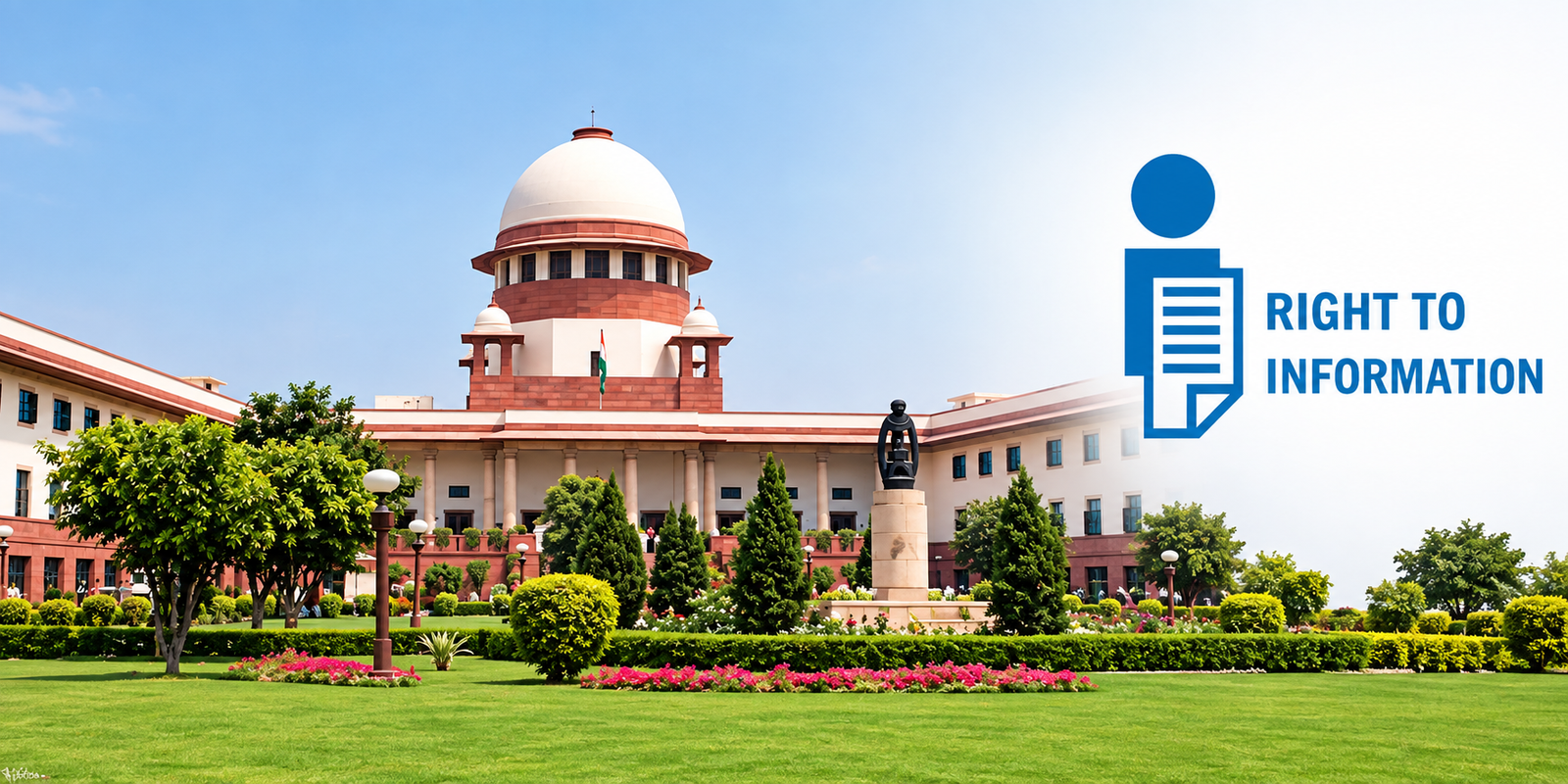
The judgment of the Supreme Court of India in Anjali Bhardwaj & Ors. v. Union of India & Ors., Writ Petition (Civil) No. 436 of 2018, decided on 15 February 2019, is an important pronouncement concerning the effective implementation of the Right to Information Act, 2005 and the institutional machinery created under it. The judgment examines the relationship between the constitutional right to information, transparent governance, the functioning of Information Commissions and the obligation of governments to ensure that vacancies in these Commissions are filled within a reasonable time. The Court delivered the judgment in a Public Interest Litigation instituted under Article 32 of the Constitution. The petition raised a fundamental institutional concern: a statutory right which is intended to be exercised within a time-bound framework becomes substantially meaningless if the authorities responsible for deciding appeals and complaints remain understaffed for prolonged periods.
The case is significant because the Court did not approach the problem merely as an administrative issue concerning appointments. It considered the Information Commissions to be indispensable to the functioning of the RTI framework and connected their effective functioning with the fundamental right guaranteed under Article 19(1)(a). The Court also considered transparency in the appointment process, the diversity of candidates considered for appointment, the terms and conditions of service, the publication of selection criteria and the need for timely filling of vacancies. The court’s order consequently represents an important judicial intervention in strengthening the institutional foundations upon which the right to information depends.
Directions of the Supreme Court
The Supreme Court issued general directions aimed at improving transparency, diversity and continuity in the appointment and functioning of Information Commissions. In relation to transparency, the Court noted that the Central Government had begun placing information concerning advertisements, applications received, particulars of applicants, the composition of the Search and Selection Committees and other relevant material on its website, and directed all States to follow the same system. The Court further observed that the terms and conditions governing appointments should, as a matter of appropriate practice, be expressly stated in the advertisement and placed on the website. It similarly stated that the criteria adopted by Search Committees for shortlisting candidates should be made public so that the process could be assessed against objective and rational standards.
Emphasising the breadth of Sections 12(5) and 15(5) of the RTI Act, the Court expected that appointments would not remain confined to serving or retired government officials and that suitable candidates from the other fields specified in the statute would also be considered. Reiterating the directions in Union of India v. Namit Sharma, it required consideration of persons of eminence in public life possessing wide knowledge and experience in the statutory fields and required the recommending Committees to record, against each selected candidate, material demonstrating such eminence, knowledge and experience, which would thereafter be accessible to citizens.
On the question of vacancies, the Court impressed upon the Union and State Governments the need to fill posts without delay and stated that the appointment process should ordinarily begin one to two months before a vacancy was expected to arise, so as to minimise the interval between the occurrence of a vacancy and its eventual filling. Having regard to the particular workload and pendency before individual State Information Commissions, the Court also issued State-specific directions and recommendations for filling existing vacancies and, in several cases, increasing the number of Information Commissioners within prescribed timelines.
The writ petition was disposed of in terms of these directions, with liberty to the petitioners to approach the Court again, either by an appropriate application or a fresh writ petition, if circumstances subsequently required further intervention.
Facts of the Case
The petition was instituted under Article 32 of the Constitution as a Public Interest Litigation seeking effective implementation of the Right to Information Act, 2005. The petitioners contended that persistent vacancies in the Central Information Commission and several State Information Commissions had resulted in substantial accumulation of appeals and complaints and were impairing citizens’ ability to meaningfully exercise their right to information. The petitioners emphasised the time-bound character of the RTI framework. While information is ordinarily required to be supplied within thirty days under Section 7 and first appeals are ordinarily required to be decided within the statutory period prescribed by Section 19, appeals and complaints before Information Commissions were frequently remaining pending for several months and, in some cases, years. According to the petitioners, such delays undermined the purpose of a legislation designed to secure prompt access to information.
Reliance was placed on the March 2018 “Report Card on the Performance of Information Commissions in India”, which indicated that eight Information Commissions had waiting periods exceeding one year for the hearing of appeals and complaints. The situation before the Central Information Commission was particularly serious. Four posts of Information Commissioners were vacant, and more than 23,500 appeals and complaints were pending as on 4 April 2018. The petitioners further pointed out that many of these vacancies were foreseeable, since they arose from retirement or completion of tenure, and that the appointment process could therefore have been initiated sufficiently in advance. Applications had in fact been invited in September 2016 for vacancies expected in December 2016 and February 2017, yet the posts remained unfilled for a considerable period.
The petitioners also alleged a lack of transparency in the process of shortlisting, selecting and appointing Information Commissioners. Among other reliefs, they sought timely commencement of the appointment process before anticipated vacancies arose, disclosure of the criteria and material relating to shortlisting and selection, and adoption of a transparent method of appointment by the Union and State Governments.
Observations of the Court
The Supreme Court reiterated the constitutional importance of the right to information, which had been recognised even prior to the enactment of the RTI Act as flowing principally from the freedom of speech and expression guaranteed under Article 19(1)(a), and which had also been connected in earlier decisions with Article 21. Access to information concerning public affairs enables citizens to participate meaningfully in democratic governance and promotes governmental accountability.
The Court also expressed concern about the pattern of appointments to Information Commissions. Although Sections 12(5) and 15(5) deliberately contemplate persons of eminence possessing knowledge and experience across several fields, the Court noted that appointments had in practice overwhelmingly been made from the government-service category. It emphasised that equally suitable candidates could be available from other walks of life and that the statutory breadth of eligibility was intended to give the Commissions a wider representative character. At the same time, the Court expressly clarified that it was not suggesting that the persons already appointed were undeserving.
The Court further observed, while examining serious pendency before individual State Commissions, that prolonged non-disposal of appeals and complaints could deter or discourage citizens from seeking information or pursuing RTI applications. Excessive delay therefore affects more than administrative efficiency; it can diminish the practical value of the right itself. More broadly, the Court observed that the RTI Act serves purposes extending beyond disclosure of information alone. Proper implementation of the legislation promotes good governance, which the Court regarded as integral to a vibrant democracy and connected with the constitutional vision of development and accountable government.
The judgment establishes that the effectiveness of the right to information depends upon the existence of functional Information Commissions possessing institutional strength proportionate to their workload. Sections 12 and 15 of the RTI Act permit the appointment of such number of Information Commissioners, subject to the statutory maximum, “as may be deemed necessary.” The Court held that the number required must therefore be determined with reference to the actual workload and pendency before the Commission rather than by treating a smaller sanctioned strength as sufficient irrespective of circumstances.
Where inadequate strength leads to prolonged delay in disposal of appeals and complaints and thereby frustrates access to information, the Government bears a statutory and constitutional obligation to ensure an adequate number of Information Commissioners for the prompt and effective functioning of the appellate mechanism. Since the right to information is protected as an aspect of Article 19(1)(a), predictable vacancies cannot be permitted to render the statutory enforcement machinery ineffective through avoidable administrative delay.
The judgment further affirms that the statutory scheme governing appointments must be implemented consistently with the breadth of eligibility contemplated under Sections 12(5) and 15(5), and that transparency in the appointment process, objective shortlisting criteria and timely filling of vacancies are necessary safeguards for the effective functioning of the institutions created to enforce the right to information.