BJPs attempt to compromise independence of Judiciary – Shanti Bhushan
The letter of Gopal Subramaniam to the CJI withdrawing his consent for appointment as a judge of the Supreme Court has created quite a furore in the country.


The letter of Gopal Subramaniam to the CJI withdrawing his consent for appointment as a judge of the Supreme Court has created quite a furore in the country.

THE India Against Corruption movement started in 2012 culminated in the formation of the Aam Aadmi Party (AAP). By venturing into electoral arena, the AAP challenged the established political parties and promised to fight corruption, if voted to power.
The government’s attempt to restore the predominant voice of the political class through the Judicial Appointments Commission is a recipe for disaster

Bar council of India (BCI) on Saturday demanded immediate withdrawal of national judicial appointment commission bill for looking into appointment and transfer of judges terming it an “affront on independence of judiciary”.

In last-minute changes, the UPA government has proposed the inclusion of two "eminent persons" instead of two "jurists" in a six-member judicial appointments commission that will seek to strike a balance and avoid extra weightage to judiciary in the body.
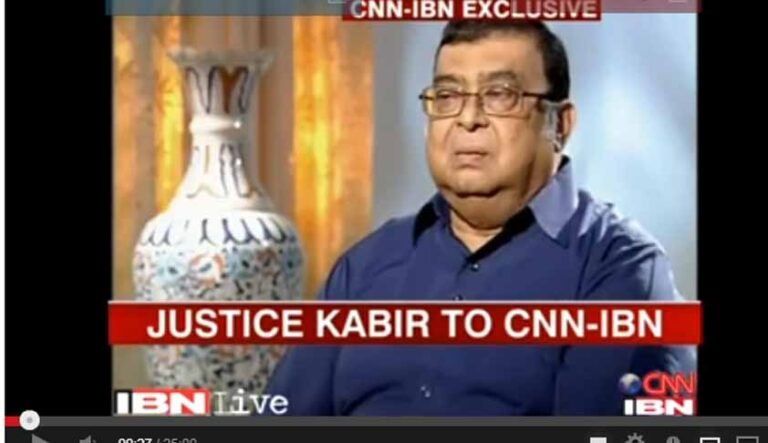
Gujarat High Court Chief Justice Bhaskar Bhattacharya has complained that Chief Justice of India Altamas Kabir — who retires on July 18 — blocked his elevation to the Supreme Court earlier this year because, as a member of the collegium of the Calcutta High Court, he had opposed the appointment of CJI Kabir's lawyer sister to the Bench, a decision he said was tantamount to "rape" of the court.
The deplorably small number of judgments by Justice Cyriac Joseph, especially when courts have a huge backlog of cases, is valid enough reason for concern at his suitability for the National Human Rights Commission
Among the areas of reform that need urgent attention are appointment of judges, working of the judicial system, and restoring the independence of government law officers
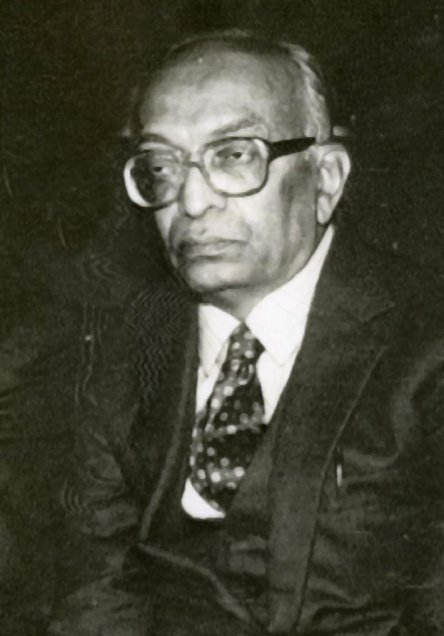
Two eminent jurists who passed away in the span of a week in April had made invaluable contributions to the rule of law, judicial accountability and ethics in public life. By V. VENKATESAN in New Delhi
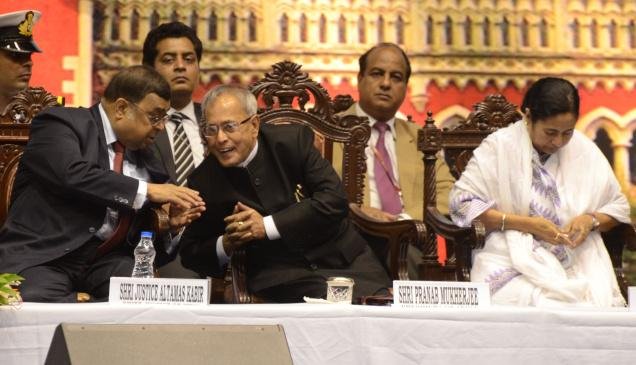
The success of a parliamentary democracy depended on “maintaining a fine balance” between the executive, the legislature and the judiciary, President Pranab Mukherjee said in Kolkata on Sunday as he called upon the judiciary to come up with a mechanism to “ self-discipline itself” to maintain the balance.
In Memoriam: Justice J S Verma Wednesday, 24 April 2013…
Jagdish Sharan Verma was one of those rare judges of the Supreme Court who stood for professional ethics and certain values in public life. Although public memory is sure to associate him with the recent anti-rape panel which produced a landmark report recommending far-reaching changes in our penal law, he had left an indelible ink on many other causes as well.
The judgment in Kesavananda Bharati v State of Kerala, whose 40th anniversary falls today, was crucial in upholding the supremacy of the Constitution and preventing authoritarian rule by a single party
Justice Jagdish Sharan Verma was the architect of a report that became instrumental in shaping a new, stronger anti-rape law in the country.
Has public interest litigation lost its direction and abandoned its original constituency, the marginalised and the underprivileged sections of society?
Increasing workload, a higher rate of admission, and constitution of multiple two-judge Division Benches have resulted in a huge increase in the number of judgments handed down by the Supreme Court, which again increases the probability of inconsistencies in judgments.
Criteria that were never conceived in the Constituent Assembly now determine who gets to sit on India’s apex court. Each of these unwritten qualifications, age, seniority, and diversity, is problematic in its present form. By ABHINAV CHANDRACHUD Frontline May 3 2013
