


CJAR Convenor exposes the 47th Standing Committee Report
Accountability, independence can coexist, Centre tells CJI
Allaying the apprehensions expressed by Chief Justice of India S.H. Kapadia, the Centre on Friday made it clear that the Judicial Standards and Accountability Bill would not in any way infringe the independence of the judiciary. The attempt to link the Bill with the independence of the judiciary was not based on facts, the Law and Justice Ministry said, in response to the CJI’s speech at the Independence Day celebrations organised by the Supreme Court Bar Association.
Changes sought in Judicial Standards & Accountability Bill
The participants also called for deletion of Sections 9 to 16 of the Bill dealing with the forming of a "Complaints Scrutiny Panel" besides the Oversight Committee
Wider consultation necessary for appointment of judges: Katju
Chairman of Press Council expresses need for changes in the contempt law The former Supreme Court judge and Chairman of Press Council of India Markandey Katju expressed the need for Chief Justice of India to go for wider consultation than restricting himself to five judges of the collegium while recommending names for appointment of judges to the Supreme Court and high courts.
Petition to Chief Justice of India- Remove Justice Bhaktavatsala
A judge's obligation to the public starts and ends with his or her analysis of the law, its correct use, not with the preaching of personal beliefs or preferences. Chief Justice S H. Kapadia once said, "High Courts and the Supreme Court are courts of principles.
Raising the bar
Since it alters the entire mechanism for investigating allegations of misbehaviour against members of the higher judiciary and simplifies the procedure for their removal, the Judicial Standards and Accountability Bill is a hugely significant piece of legislation. The proposed law, which seeks to replace the outmoded Judges Inquiry Act 1968, under which cumbersome impeachment trials are necessary to dismiss erring judges, lays down enforceable norms for their conduct and enables a wider range of disciplinary action for proven misbehaviour.

AP High Court judge’s appointment comes under SC scanner
The Supreme Court today agreed to scrutinise the appointment of an Andhra Pradesh High Court judge, Justice N V Ramana, despite pendency of a criminal case against him during his appointment, and sought from the Attorney General all documents pertaining to his elevation.
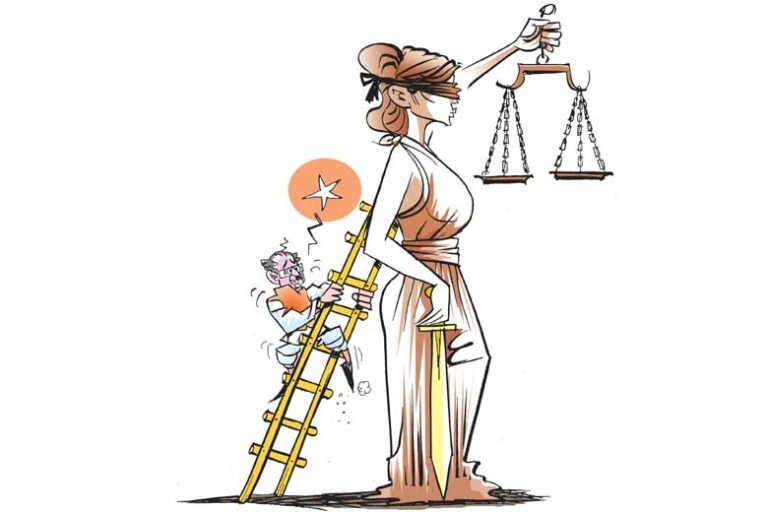
Globalisation and the Judicial Sovereignty of India
An award passed by an arbitral tribunal in Singapore has criticised the Supreme Court of India for its delay in handling cases and directed the Government of India to compensate an investor from Australia for such a hold-up. This hits at the root of the country's judicial sovereignty. Bureaucrats who draft bilateral investment treaties that enable such claims have a lot to answer for.
P K Suresh Kumar (suresh207@hotmail.com) is a senior advocate at the High Court of Kerala, Kochi.
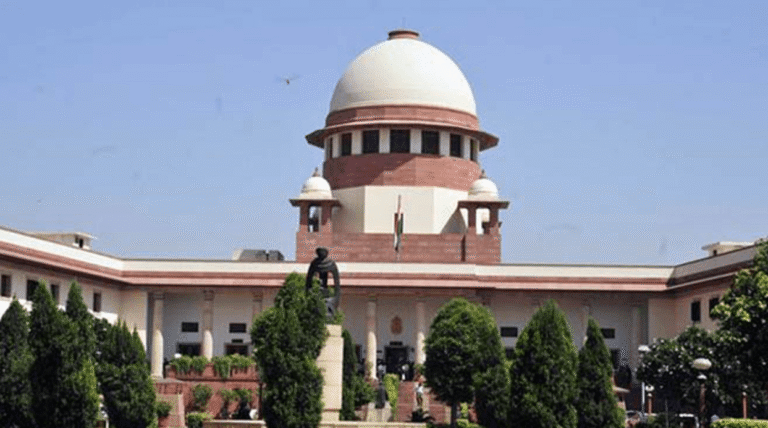
Judges have to give details of foreign trips: Supreme Court
NEW DELHI: The Supreme Court on Monday restored a government rule requiring apex court and high court judges to keep the home and external affairs ministries in the loop when travelling abroad, even on private visits.

Judges’ selection row: SC asks HC to show answer sheets
The Supreme Court today asked the registrar of Chhattishgarh High Court to allow an NGO, which alleged irregularities in the 2008 civil judges exam there, to inspect answer sheets of 60 successful candidates.
‘Loyal’ bureaucrats being appointed as information commissioners: Supreme Court
'Loyal' bureaucrats are being appointed as information commissioners at the Centre and State transparency panels, the Supreme Court observed on Thursday, saying it's order for judicial members in the commissions would make them independent and free from government influence.
Info members from judicial background not correct: SC
Votaries of transparency law told the Supreme Court that its direction for appointing people from judicial background as members of the Central and state information commissions was "legally not correct" and would lead to "frustrating" the whole objective of the RTI Act.
‘Over 65,000 cases pending in SC till November this year’
A total of 65,703 cases are pending in the Supreme Court till November this year, out of which 6,445 cases have been pending for more than five years, Law and Justice Minister Ashwani Kumar told the Rajya Sabha today.
PIL over case against Andhra judge: SC seeks record of appointment 12 yrs ago
The appointment of a High Court judge made 12 years ago was reopened by the Supreme Court on Friday after a PIL claimed that a criminal case pending against the judge was overlooked by the selection committee of Supreme Court judges which recommended his appointment.
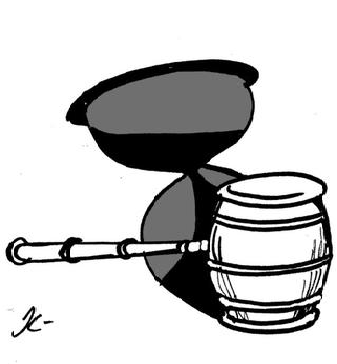
The age of judicial reform
On August 18, 2012, Prime Minister Manmohan Singh, speaking at the 150th year celebrations of the Bombay High Court, said the government was in favour of raising the age of retirement of High Court judges. Presently, Supreme Court judges retire at 65 and High Court judges at 62.
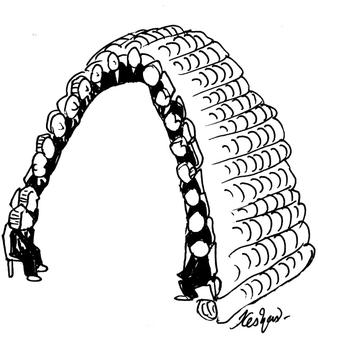
Judicial appointments & disappointments
A commission to select judges will be an improvement on the collegium only if its members are of the highest standing
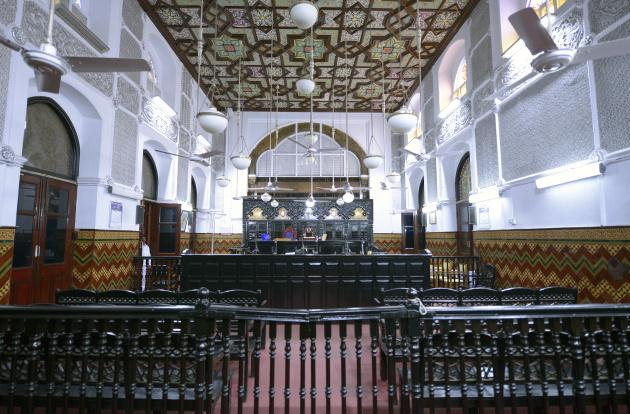
Let’s make judges selection more transparent
Wide consultation, rather than the closed-door deliberations of the collegium, is what the Supreme Court and the High Courts need